Skin Brightening and Lightening Products: What to Look For

Skin brightening and skin lightening products are often discussed as if they all do the same thing. They do not. Some support gentle surface renewal, some target the appearance of excess pigment, and others rely on harsh or poorly disclosed ingredients that may irritate the skin and make discoloration more noticeable.
The responsible goal is not to erase your natural skin color. It is to support a brighter, more even-looking tone within your natural range while addressing concerns such as dark spots, post-inflammatory marks and uneven pigmentation.
Brightening, Lightening, Whitening and Bleaching: What Do These Terms Mean?
People use brightening, lightening, whitening and bleaching for overlapping search intent, but the words can create very different expectations.
- Brightening usually describes improving dullness and helping skin look more radiant or even.
- Lightening is often used for products intended to reduce the appearance of excess pigment in a specific area.
- Whitening and bleaching are legacy search terms. They should never mean applying household bleach or trying to change your identity or natural complexion.
Bryght prefers the language of brightening, hyperpigmentation and even tone. If your main concern is patchy color, read Uneven Skin Tone: Causes, Dark Spots & How to Improve It.
What Can Skin Lightening Products Actually Do?
Results depend on the cause and depth of the discoloration, the product category, consistency and how well the skin tolerates the routine. Cosmetic products may help superficial discoloration look less noticeable over time, but they cannot guarantee permanent or identical results for every person.
A good routine also considers the trigger. Repeated friction, shaving irritation, acne, ingrown hairs, inflammation, hormonal changes and sun exposure can all contribute to uneven-looking pigment. If the trigger continues, adding more active products may not solve the problem.
For a deeper explanation of pigment and product mechanisms, see How Does Skin Lightening Work? Pigment, Process & Results.
Types of Skin Brightening and Lightening Products
Gentle exfoliating products
Exfoliating formulas support the removal of dull surface cells and normal skin renewal. They may improve the appearance of superficial uneven tone, but stronger is not always better. Over-exfoliation can cause stinging, dryness and inflammation, which may leave darker marks behind.
Compare these formats in our dark spot corrector guide.
Products designed to support even-looking pigment
Some formulas use cosmetic ingredients that influence how visible pigment develops or is distributed. Product claims should be assessed in context: the complete formula, concentration, pH, packaging, directions and stability all matter. A familiar ingredient name alone does not prove that a product will be effective or suitable for your skin.
Hydrating and barrier-supportive products
Moisturizers do not directly erase hyperpigmentation, but comfortable, well-supported skin is less likely to become irritated by friction or an overly aggressive routine. Barrier support can therefore be an important part of an even-tone plan.
Professional treatments
Professional exfoliation and other in-clinic approaches can be appropriate for some concerns, but the provider should first assess the skin, explain realistic outcomes and give clear aftercare instructions. Use the Bryght Store Locator to find a provider, then contact the location directly to confirm its current services.
How to Evaluate a Skin Lightening Product
Ignore promises of instant, permanent or dramatic transformation. Instead, look for practical signs that a product has been designed for responsible use.
- A complete and readable ingredient list
- Clear directions, frequency and application area
- Warnings about broken, irritated or recently treated skin
- Realistic language about gradual and variable results
- Packaging that protects the formula and identifies the responsible company
- Customer support or professional guidance when questions arise
Avoid buying a product simply because it ranks first in a marketplace, has an extreme before-and-after image or uses phrases such as “medical strength” without meaningful context.
Ingredients and Claims That Deserve Extra Caution
The U.S. Food and Drug Administration warns consumers about over-the-counter skin lightening products containing hydroquinone or mercury. Mercury is banned in these products, and hydroquinone is not approved for over-the-counter sale in the United States. Products with missing labels, incomplete ingredient lists or unclear origins deserve particular caution.
Household bleach, undiluted acids and improvised DIY mixtures do not belong on skin. “Natural” also does not automatically mean gentle. Raw citrus is a good example: it can irritate skin and react with sunlight. Read Does Lemon Juice Lighten Skin? Risks & Safer Options before considering lemon-based home remedies.
Skin Lightening Products for Hyperpigmentation and Dark Spots
Hyperpigmentation is not a single diagnosis. A dark mark left after a blemish is different from melasma, a changing mole, a velvety dark patch or persistent irritation. Product choice should follow the likely cause rather than the color alone.
For a complete overview of pigment changes, read what hyperpigmentation is, its common types and available care options.
Consider a dermatologist or other qualified medical professional when pigmentation appears suddenly, changes shape or color, causes symptoms, covers a large area or does not improve. Cosmetic products should not be used to disguise a condition that needs assessment.
Can Skin Lightening Products Be Used on Sensitive or Intimate Areas?
Not every facial or body product belongs on delicate external skin. Intimate areas experience friction, moisture, shaving and other factors that can change tolerance. Never apply a cosmetic brightening product internally, on mucosal tissue, broken skin or an actively irritated area unless its directions specifically support that use and a qualified professional has advised it.
If the concern is concentrated on the face, see our guide to dark spots on the face.
Patch test first, follow the label and avoid introducing several active products at once. Pause use if you experience persistent burning, swelling, blistering or worsening discoloration.
A Bryght At-Home Option
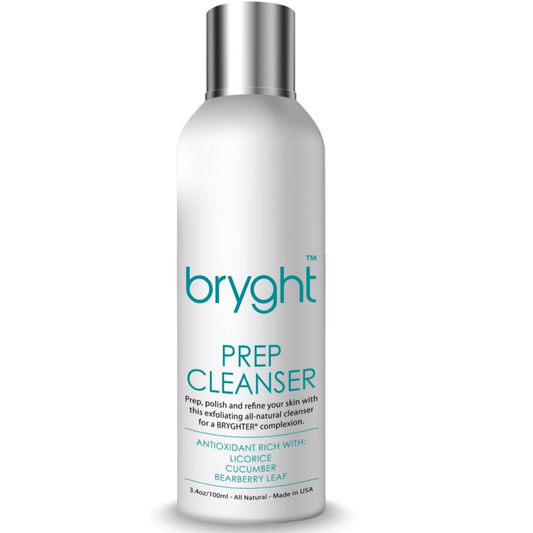
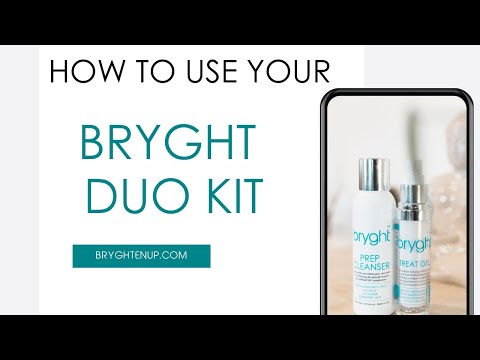
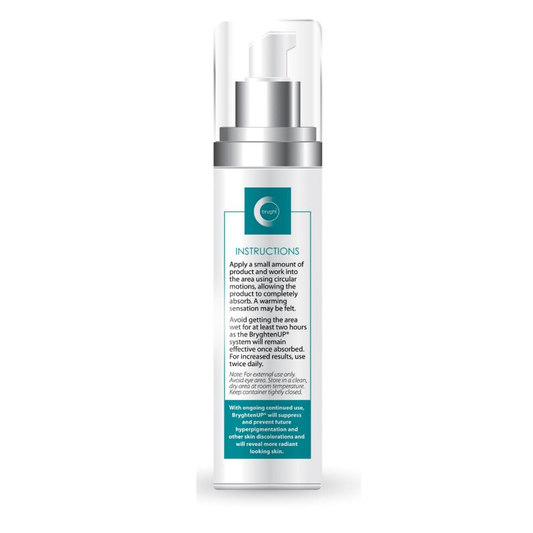
For those who prefer a simple at-home routine, the Bryght Duo Kit combines the Prep Cleanser and Treat Gel. It is positioned for the appearance of hyperpigmentation and uneven tone, including delicate external skin. Use it only as directed on the current product label and allow results to develop gradually.
The product page owns the purchase decision. This guide is here to help you compare categories, recognize warning signs and decide whether at-home care or professional guidance is more appropriate.
How to Introduce a New Brightening Product
- Read the full label and confirm that the intended application area matches your concern.
- Patch test on a small area and wait for delayed irritation.
- Begin at the lowest recommended frequency.
- Keep the rest of the routine gentle and avoid stacking several exfoliating products.
- Reduce repeated friction, picking and shaving irritation where possible.
- Use sun protection on exposed areas and follow any product-specific precautions.
- Take consistent, well-lit progress photos instead of judging the skin day by day.
Do Skin Lightening Products Work?
Some well-formulated products can improve the appearance of certain forms of excess or uneven pigment. No product works equally for every cause, every skin tone or every body area. Realistic results are usually gradual, and irritation can erase progress by creating new post-inflammatory pigmentation.
The best skin lightening product is therefore not the one promising the fastest transformation. It is the one that suits the concern, application area and skin tolerance, has transparent directions and can be used consistently without damaging the skin barrier.
Frequently Asked Questions
What is the difference between a skin brightener and a skin lightener?
A brightener generally targets dullness and overall radiance, while a lightening product is more often associated with visible excess pigment. In practice, brands and searchers frequently use the terms interchangeably, so the formula and directions matter more than the front-label wording.
Are natural skin lightening products always safer?
No. Botanical or kitchen-derived ingredients can still irritate skin or cause allergic and sun-related reactions. Safety depends on the complete formulation, concentration, directions and individual tolerance.
How quickly should a brightening product work?
Timing varies with the cause and depth of pigmentation, the formula and consistency. Claims of instant, permanent or extreme change should be treated cautiously.
Can I use more than one brightening product at the same time?
Layering several active formulas can increase irritation. Introduce one product at a time and follow the labels. Seek professional advice if you are unsure whether products are compatible.
When should I stop using a product?
Stop if it causes persistent burning, swelling, blistering, rash or worsening discoloration. Seek medical care for a severe reaction.
Sources
- U.S. Food and Drug Administration: Skin Product Safety
- American Academy of Dermatology Association: How to Fade Dark Spots in Darker Skin Tones
- DermNet: Postinflammatory Hyperpigmentation
Last updated: August 22, 2026. This article is educational and is not a substitute for individualized medical advice.
Share